

There was no announcement.
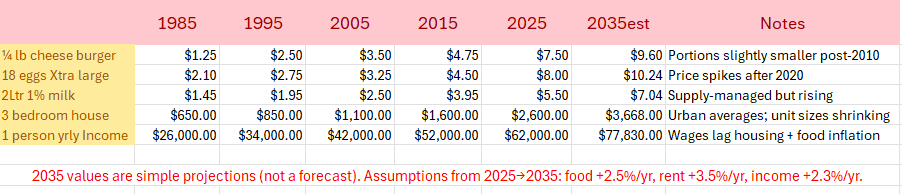
No headline. No moment where someone said things would cost more and give less.
It just happened slowly enough that most of us adjusted instead of objected.
Big changes rarely arrive loudly. The ones that matter most come through small shifts: a price increase here, a smaller portion there, a “temporary” adjustment that never reverses. Over time, the baseline moves. Once it does, we stop remembering what things used to feel like.
This isn’t nostalgia.
It’s measurement.
Prices didn’t simply rise value eroded while labels stayed familiar.
A quarter-pound burger is still called a quarter-pound burger. Rent is still described as “average.” Income still technically increases. But the relationship between them changed.
Food costs more and delivers less.
Rent consumes more income while offering less space per dollar.
Wages move, but purchasing power quietly shrinks.
Nothing broke overnight which is exactly why it worked.
Shrinkflation didn’t start recently. Only the subtlety improved. Packaging stayed the same. Branding got better. Portions quietly changed. Not enough to spark outrage just enough that you now need more than before to feel the same result.
You don’t notice it week to week.
You notice it when you compare decades.
Food prices irritate you.
Rent prices shape your life.
When rent rises faster than income, it doesn’t just affect budgets. It changes where you live, how much risk you can take, whether saving feels possible, and how flexible your life actually is. And again, it wasn’t a sudden jump it was a steady climb paired with shrinking expectations.
Smaller units. More fees. Less included.
Income did increase. That’s not the argument.
The argument is that what income can absorb decreased. Essentials claim a larger share, leaving less room for choice, error, or progress. That’s how people end up working harder without moving forward not failing, just standing still.
The 2035 estimate isn’t a prediction. It’s a question.
If the pattern continues even modestly what does “normal” look like next?
Because when costs rise quietly and consistently, pressure compounds. By the time it feels obvious, it already feels familiar.
The most important shift wasn’t economic.
It was psychological.
We got used to it.
We adjusted expectations instead of questioning trajectories. We internalized strain that wasn’t personal. We treated “getting by” as success. And the adjustments kept coming small enough to ignore, steady enough to matter.
Final thought:
Don’t just ask whether something costs more.
Ask whether it gives you the same return on effort it once did.
That’s where the quiet change lives.
