There was a time when buying a car meant owning everything in it.
You paid for heated seats — you got heated seats. No asterisks. No monthly bills. No app required.
That era is quietly ending.
What’s happening under the hood
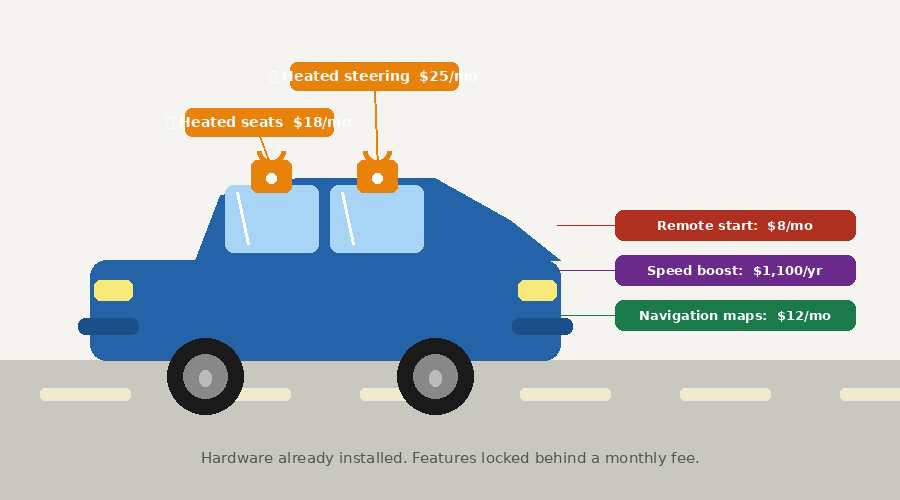
Car manufacturers have discovered a new revenue stream, and it doesn’t require building anything extra. The hardware is already there — the heating coils are in your seat, the wires are in your steering wheel — but a software switch decides whether you actually get to use them.
BMW made headlines when they trialled a monthly fee of around $18 to activate heated seats. The backlash was loud enough that they eventually reversed course for hardware-based features in most markets. But the idea didn’t die — it just got quieter.
Hyundai has floated a “Features on Demand” model where heated seats could be toggled on or off via a monthly subscription. The pitch from manufacturers is efficiency: it’s cheaper to build every car identically with all the hardware installed, and simply unlock features for whoever pays. Neat for the factory floor. Less neat for the person who assumed they bought a complete car.
It goes well beyond a warm seat
The heated seat saga grabbed headlines, but it’s just one corner of a much larger map.
Toyota and others now require ongoing subscriptions — often bundled into “Connected Services” plans — for remote start via your phone, once the trial period runs out. Something that used to work forever, tied to a key fob you already own, now expires.
Mercedes-Benz sells an “Acceleration Increase” upgrade for their electric EQ models. Pay roughly $750 to $1,100 per year and your car goes from 0 to 100 km/h a full second faster. The motor capable of that speed is already sitting in your car. You’re just renting access to it.
Audi and BMW have moved advanced parking assistants, dashcam features, and live map updates behind subscription paywalls too.
Why are they doing this?
Three reasons, and none of them are about you.
First, manufacturing efficiency. Standardizing every vehicle simplifies the factory line. Instead of managing dozens of trim combinations, you build one version and sell access in layers.
Second, second-hand revenue. Car companies traditionally make money once — when a vehicle is first sold. Subscriptions let them collect from the second owner, the third, and every owner after that. The car becomes a recurring income stream long after it left the lot.
Third, the EV factor. Electric vehicles need far less maintenance than gas cars — fewer oil changes, fewer brake jobs, fewer parts wearing out. That’s good for the environment and good for drivers. But it’s a problem for manufacturer revenue models built around service income. Subscriptions are the replacement.
Is anyone pushing back?Some. New Jersey has introduced legislation that would ban manufacturers from charging subscriptions for features that are physically installed in the car. It’s a small crack in the wall, and it signals that consumers — and some lawmakers — aren’t simply accepting this shift.
The BMW heated seat reversal also showed that public pressure can move the needle, at least temporarily, at least in some markets.
But the underlying incentive hasn’t changed. As long as a locked feature is more profitable than an included one, someone will keep trying.
The real question
When you buy a car, what exactly are you buying?
If the hardware is there, the wiring is there, and the software can enable it — but you don’t pay a monthly fee — you’re sitting in a cold seat that your car is perfectly capable of warming.
That’s not a missing feature. That’s a feature you already own, held hostage.
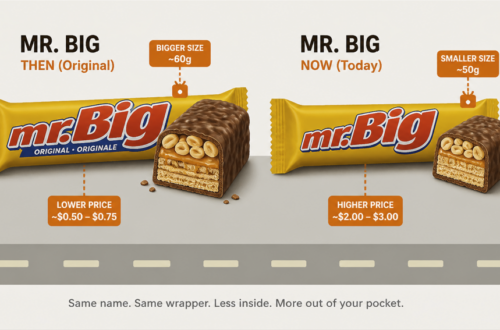
The shrinkflation principle applies here too. You’re not getting less — you’re getting the same product, just with a lock on parts of it. The package looks the same. The sticker price looks the same. But what you actually control is quietly shrinking.
We accepted software subscriptions. We accepted streaming libraries that change what’s available month to month. Are we going to accept it in our cars too?
Pull up a chair. Think about that one for a minute.